(!)Due to Microsoft's end of support for Internet Explorer 11 on 15/06/2022, this site does not support the recommended environment.
- [Announcement] MISUMI Malaysia website new user interface. Clearer navigation, easy product search and more. Explore now! May contact us at (60) 3 7890 6399 for any inquiries.
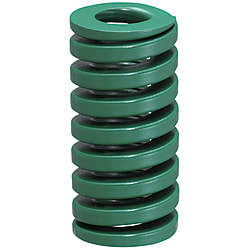
Coil Springs -SWH- (NT-SWH8-40)
Click this image to zoom it.
Move the mouse over the image to zoom
- Volume Discount
Coil spring/SWH type. The material is oil tempered wire for springs.
- FL300
- OD100
Part Number
Configured Part Number is shown.
NT-SWH8-40


Part Number
CAD Data download and 3D preview are not available because the part number has not yet been determined.
- *In order to open the CAD Data download and 3D preview screen, the part number must be fixed.
- Please confirm the part number from "Specification / Dimension"on the left side, and then perform the CAD Data Download / 3D Preview operation.
| Part Number |
|---|
| NT-SWH8-40 |
| Part Number | Standard Unit Price | Minimum order quantity | Volume Discount | Days to Ship | RoHS | Maximum load (N) | Outer diameter (D) (mm) | L Dimension (L) (mm) | Coating Removal |
|---|---|---|---|---|---|---|---|---|---|
MYR 47.74 | 1 Piece(s) | Available | 8 Day(s) or more | 10 | 206 | 8 | 40 | No coating |
Loading...
Basic Information
| Material | SWOSC-V Equivalent(Oil-tempered wire) | Allowable deflection ratio(%) | 24 |
|---|
Please check the type/dimensions/specifications of the part NT-SWH8-40 in the Coil Springs -SWH- series.

Specification/Dimensions
-
type
- NT-SWH
- SWH
-
Maximum load(N)
-
Outer diameter (D)(mm)
-
L Dimension (L)(mm)
-
Coating Removal
- Coated
- No coating
-
CAD
- 2D
- 3D
Days to Ship
-
- All
- 1 Day(s) or Less
- 4 Day(s) or Less
- 8 Day(s) or Less
Specify Alterations
- The specifications and dimensions of some parts may not be fully covered. For exact details, refer to manufacturer catalogs .
Frequently asked question (FAQ)
- Question: What is a coil spring?
- Answer: A coil spring is a mechanical device made from a wound wire in a helical shape, designed to store and release energy, absorb shock, or maintain a force between contacting surfaces. Commonly used in automotive suspensions, machinery, and mechanical assemblies, coil springs offer flexibility, resilience, and stability.
- Question: What is the purpose of coil spring?
- Answer: The main purpose of a coil spring is to absorb mechanical energy and then release it when needed. In automotive applications, it supports vehicle weight and cushions road impacts. In machinery, it maintains tension, pressure, or spacing, contributing to smooth motion and load management.
- Question: What are coil springs called in various industries?
-
Answer:
Coil springs are also referred to as:
- Compression springs (used to resist compression forces)
- Tension springs (when designed to handle pulling forces)
- Helical springs (based on their wound shape)
- Question: How are oil-tempered coil springs different from standard springs?
- Answer: Oil-tempered coil springs are heat-treated and quenched in oil to enhance strength and durability. This process increases their fatigue resistance and load capacity, making them ideal for high-stress applications like industrial equipment or automotive suspensions.
- Question: What materials are typically used for coil springs?
- Answer: Coil springs are often made from carbon steel, stainless steel, or oil-tempered wire. The oil-tempered wire used in SWH-type coil springs offers superior toughness, wear resistance, and longevity, especially under cyclic loading conditions.
- Question: Can coil springs be customized for specific loads or environments?
- Answer: Yes. Coil spring dimensions—such as wire diameter, coil count, free length, and outer diameter—can be adjusted to meet specific force requirements, working loads, and environmental conditions.
- Question: Are coil springs suitable for high-temperature environments?
- Answer: Standard coil springs made from oil-tempered wire function well in moderate heat. For high-temperature environments, materials like Inconel or stainless steel are preferred to maintain structural integrity without softening or losing elasticity.
- Question: How do you determine the right coil spring size?
-
Answer:
Selecting the correct coil spring involves evaluating several parameters:
- Load requirement
- Spring rate (stiffness)
- Operating environment
- Space constraints
- Question: What are common signs of coil spring failure?
- Answer: Symptoms of a failing coil spring include deformation, reduced load-bearing capacity, uneven force distribution, and visible cracks or corrosion. Regular inspection is crucial in high-cycle applications to avoid unexpected mechanical failures.
- Question: How are coil springs maintained in industrial settings?
- Answer: Although coil springs are low-maintenance, ensuring cleanliness, proper installation, and periodic inspection helps extend their life. In corrosive or high-load environments, protective coatings or using corrosion-resistant materials is recommended.
Products like this...
| Part Number |
|---|
| NT-SWH10-25 |
| NT-SWH10-30 |
| NT-SWH10-35 |
| NT-SWH8-45 |
| NT-SWH8-50 |
| NT-SWH8-55 |
| Part Number | Standard Unit Price | Minimum order quantity | Volume Discount | Days to Ship | RoHS | Maximum load (N) | Outer diameter (D) (mm) | L Dimension (L) (mm) | Coating Removal |
|---|---|---|---|---|---|---|---|---|---|
MYR 38.33 | 1 Piece(s) | Available | 8 Day(s) or more | 10 | 294 | 10 | 25 | No coating | |
MYR 38.69 | 1 Piece(s) | Available | 8 Day(s) or more | 10 | 294 | 10 | 30 | No coating | |
MYR 39.31 | 1 Piece(s) | Available | 8 Day(s) or more | 10 | 294 | 10 | 35 | No coating | |
MYR 48.36 | 1 Piece(s) | Available | 8 Day(s) or more | 10 | 206 | 8 | 45 | No coating | |
MYR 49.03 | 1 Piece(s) | Available | 8 Day(s) or more | 10 | 206 | 8 | 50 | No coating | |
MYR 49.34 | 1 Piece(s) | Available | 8 Day(s) or more | 10 | 206 | 8 | 55 | No coating |
Additional Products in this Category
- Coil Springs -SWF-
- Coil Springs -SWL-
- Coil Springs -SWM-
- Coil Springs -SWB-
- Coil Springs -SWZ-
- Coil Spring -X-SWF-
- Coil Springs-X-SWL-
- Coil Sprints -X-SWB-
Customers Who Viewed This Item Also Viewed
-

-

-

-

-

-

-

-

-

-

-
 Coil Spring for Heavy Load-Fmax. (Allowable Deflection) = Lx19.2%/21.6%/24%
MISUMI
Standard Price : MYR 4.87-
Days to Ship : 1 Day(s) or more
-


Tech Support
- Press
- Tel:(60) 3 7890 6399
- 9:00am - 6:00pm (Monday - Friday)
9:00am - 1:00pm (Saturday) - Technical Inquiry
- Credit Card
- Bank Transfer



Social Media
MISUMI Contact
Copyright © MISUMI Corporation All Rights Reserved.
How can we improve?
How can we improve?
While we are not able to respond directly to comments submitted in this form, the information will be reviewed for future improvement.
Customer Privacy Policy
Thank you for your cooperation.
While we are not able to respond directly to comments submitted in this form, the information will be reviewed for future improvement.
Please use the inquiry form.
Customer Privacy Policy